Lagrange Award (2008-present)
For lifetime achievement in Nonlinear Physical Science
Kazuyuki Aihara (Japan)
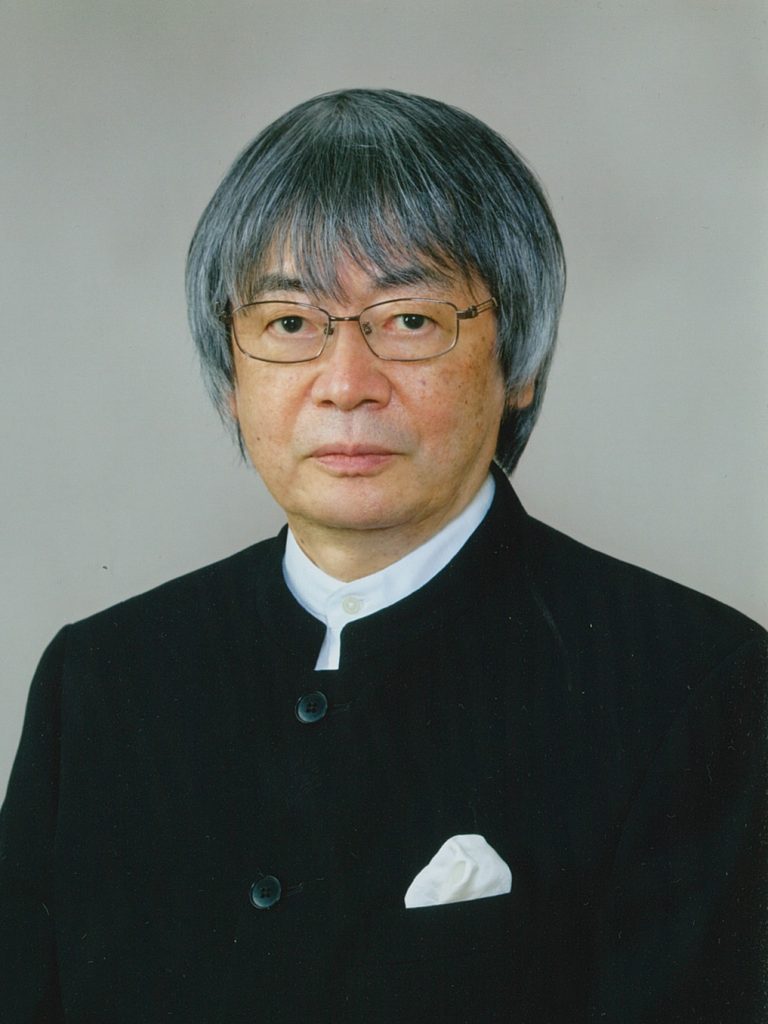
Kazuyuki Aihara received a B.E. in electrical engineering and a Ph.D. in electronic engineering from the University of Tokyo (UTokyo), Tokyo, Japan, in 1977 and 1982, respectively. Currently, he is University Professor and Professor Emeritus of UTokyo as well as Executive Director at the International Research Center for Neurointelligence (IRCN) at UTokyo. He is also leading a Moonshot project of the Cabinet Office of Japan on Comprehensive Mathematical Understanding of the Complex Control System between Organs and Challenge for Ultra-Early Precision Medicine.
He has been studying mathematical theory for modelling and analyzing complex systems and its transdisciplinary applications in science and technology from the viewpoint of mathematical engineering and chaos engineering.
Angelo Vulpiani (Italy)
Angelo Vulpiani (1954) has been full professor of theoretical physics at the Physics Department of the University of Rome Sapienza (until november 2024).
Angelo has graduated in physics from University of Rome Sapienza in 1977, G. Jona Lasinio was the supervisor of his thesis.
He was CNR Fellow (1978 – 1981), assistant professor at University of Rome (1981 – 1988), associate professor at University of L’ Aquila (1988 – 1991) and at the University of Rome (1991 – 2000), full professor at the University of Rome (2000 – 2024).
His scientific interests include chaos and complexity in dynamical systems, statistical mechanics of non-equilibrium and disordered systems, developed turbulence, phenomena of transport and diffusion and foundations of physics.
He has written about 300 scientific papers and has co-authored 12 books, in english, italian and french.
He was a visiting fellow in research institutions and universities in France, Belgium, Sweden, Denmark, and the United States.
In 2004 he has been elected Fellow of The Institute of Physics (IOP);
he has been professor at Centro Interdisciplinare B. Segre, Accademia dei Lincei (2016 – 2019), in addition he is Faculty Member of the Complexity Hub, Vienna (2020-2025), Faculty Member of the John Bell Institute (from 2019), Faculty Member of the Gran Sasso Science Institute, L’Aquila (from 2014).
He received the Statistical and Nonlinear Physics Prize of the European Physical Society (2021), the Richardson Medal of the European Geosciences Union (2023),
and the Matteucci Medal of the Accademia Nazionale delle Scienze detta dei XL (2026).
Ram Ramaswamy (India)
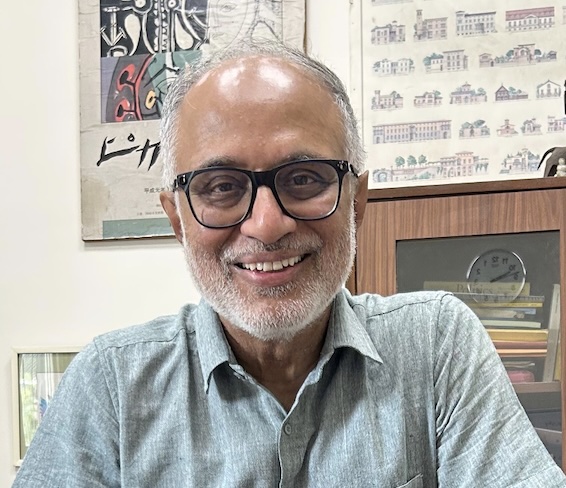
Ram Ramaswamy has worked in the area of nonlinear science over the past four decades, making significant contributions to Hamiltonian chaos, control methods, quasiperiodically driven systems, and generalized synchronization techniques. His interests also include self-organized criticality, nonequilibrium statistical physics, computational biology, and the application of dynamical systems theory to biological processes.Trained at Madras University, IIT Kanpur, Princeton University, and Caltech, he taught at Jawaharlal Nehru University in New Delhi from 1986 to 2018. He is currently Honorary Professor at the Indian Institute of Science Education and Research (IISER) Berhampur, Odisha. An elected Fellow of The World Academy of Sciences (TWAS), Trieste, he has also served as President of the Indian Academy of Sciences, Bangalore.
G.M. Zaslavsky Award (2010-present)
For breakthrough achievement in Nonlinear Physical Science
Ulrich Parlitz (Germany)
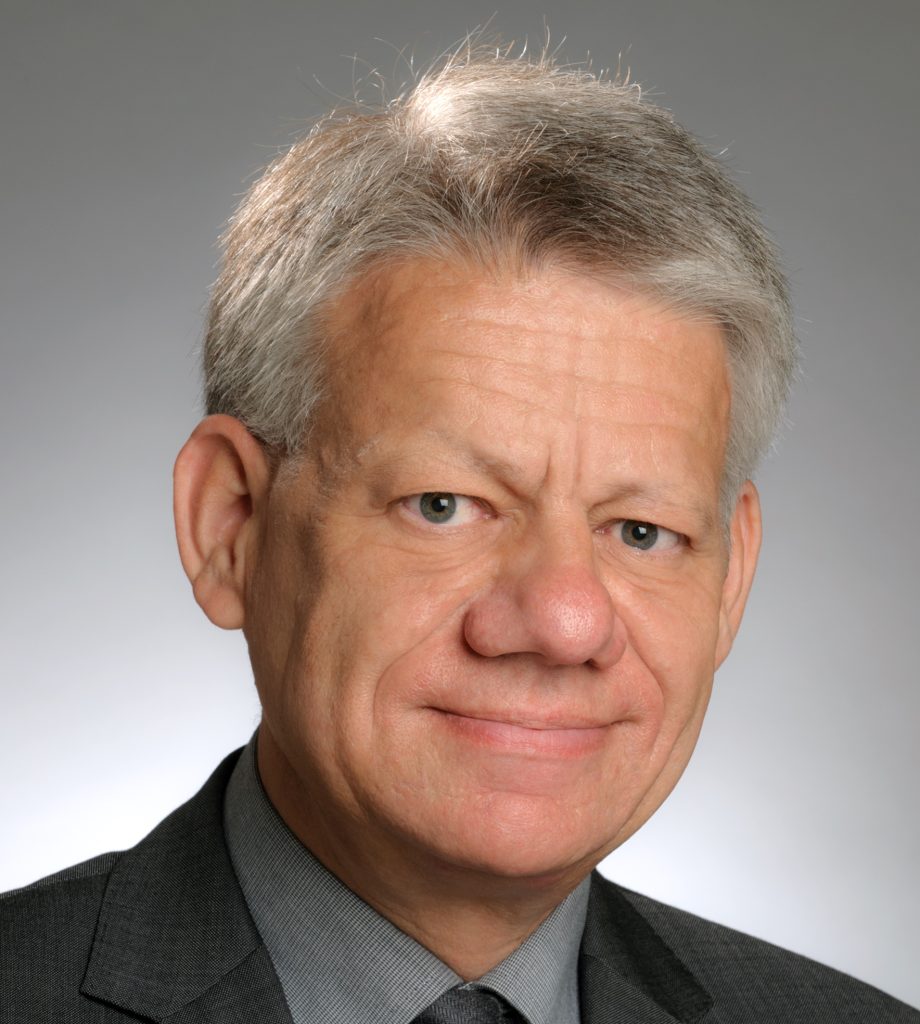
Ulrich Parlitz is a research scientist at the Max Planck Institute for Dynamics and Self-Organization, Göttingen (Germany) and an adjunct professor of Physics at the University of Göttingen. He received his PhD in 1987 at the University of Göttingen. From 1989 to 1994 he was with the Institute for Applied Physics at the Technical University of Darmstadt, Germany, and in 1994 he became a scientific assistant at the Third Institute of Physics of the University of Göttingen where he habilitated in 1997. His research focuses on nonlinear dynamics and data analysis, with contributions and applications in the fields of life sciences, synchronization of chaotic systems, nonlinear oscillators, data-driven modeling, cavitation bubble oscillations, and chaotic laser dynamics.
In 2010 Ulrich Parlitz joined the Research Group Biomedical Physics at the Max Planck Institute for Dynamics and Self-Organization. There he is involved in theoretical and experimental studies for understanding the nonlinear dynamics of the heart focusing on the onset and termination of cardiac arrhythmias. This research includes numerical studies of (transient) spatio-temporal chaos in excitable media, time seried analysis and data driven modelling of electro-mechanical excitation waves in cardiac tissue.
In 1992, Ulrich Parlitz was a visiting scholar at the Santa Fe Institute (with G. Mayer-Kress) and at UC Berkeley (with Prof. L. Chua), and in 2002 and 2003 at UC San Diego (with Prof. H.D.I. Abarbanel). He has published over 210 peer-reviewed papers and co-authored a textbook on “Nonlinear Dynamics” with G. Datseris.
Ulrich Parlitz serves as Speciality Chief Editor for the “Networks in the Cardiovascular System” section of the journal “Frontiers in Network Physiology”. In addition, he is a member of the Editorial Advisory Board of “Chaos: Int. J. of Nonlinear Science” and Associate Editor of the section “Dynamical Systems” of “Frontiers in Applied Mathematics and Statistics”. Previously, he also served as a panel member of the German Science Foundation (DFG) and on the editorial board of Phys. Rev. E.
Ying Cheng Lai (USA)
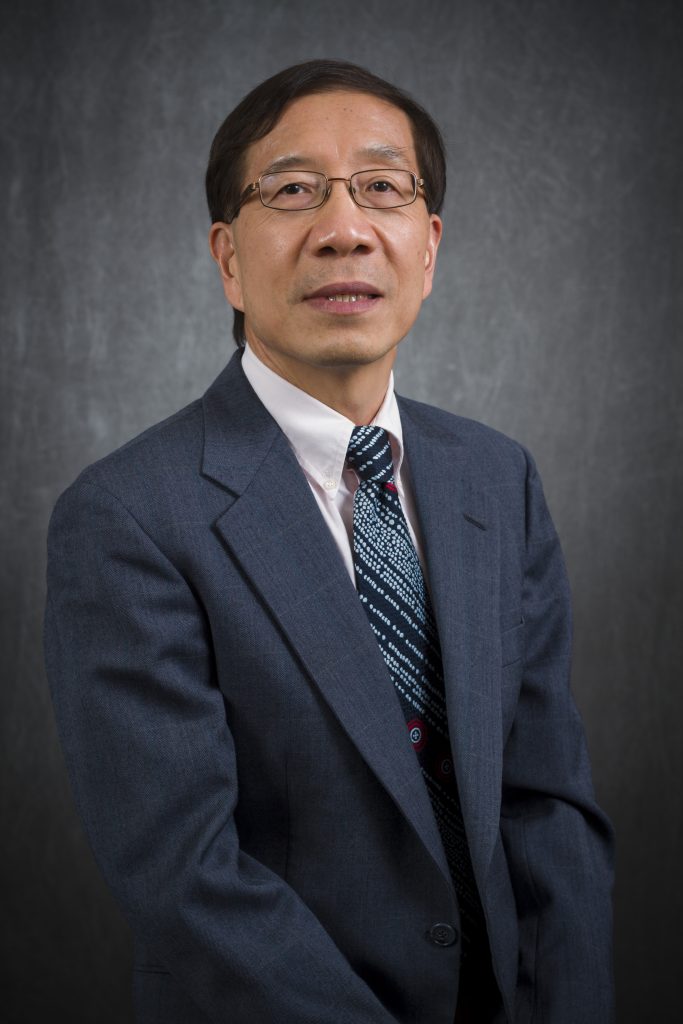
Ying-Cheng Lai earned PhD in Physics from University of Maryland in 1992, specializing in Nonlinear Dynamics. At ASU, he has been Professor since 2001, Endowed Professor since 2014, and Regents Professor (the highest faculty honor in Arizona) since 2022. He has been a Fellow of the American Physical Society since 1999. In addition, he is a Vannevar Bush Faculty Fellow of the Department of Defense, a Fellow of the American Association for the Advancement of Science, a Corresponding Fellow of the National Academy of Science and Letters of Scotland, and a member of Academia Europaea (The Academy of Europe). His current h-index is 90. His present interest is Machine Learning for Nonlinear and Complex Dynamical Systems.
Wei-Mou Zheng (China)
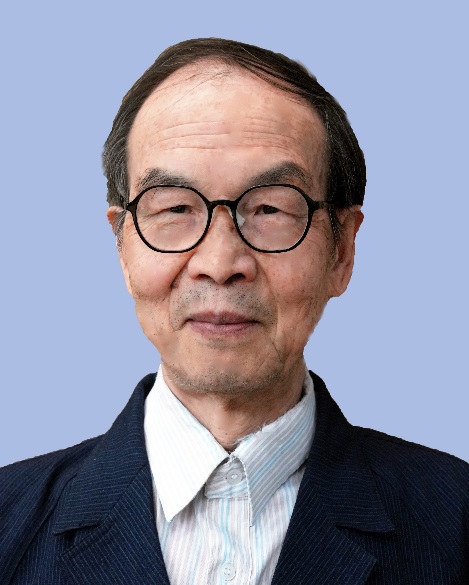
Wei-Mou Zheng is Professor Emeritus at the Institute of Theoretical Physics, Chinese Academy of Sciences. He graduated from the Department of Physics, Peking University in 1968, and received his PhD at the Free University of Brussels in 1984 (supervised by Prof. Ilya Prigogine). He was a postdoc at the Center for Statistical Mechanics, University of Texas at Austin in the 1980s, where he started his study on nonlinear dynamics. After returning to China, he collaborated with Prof. Bailin Hao and worked on applied symbolic dynamics for 1D maps. Besides the periodic window theorem and the generalized composition rule for 1D maps on the interval, he also formulated symbolic dynamics for the circle map. Later, he focused on the extension of symbolic dynamics from 1D to 2D maps and its application to ordinary differential equations by combining numerical techniques with algebraic methods. In recent years his main interest has shifted to bioinformatics.
C.S. Hsu Award (2020-present)
For distinguished scholars in Nonlinear Dynamics and Control
Haiyan Hu (China)
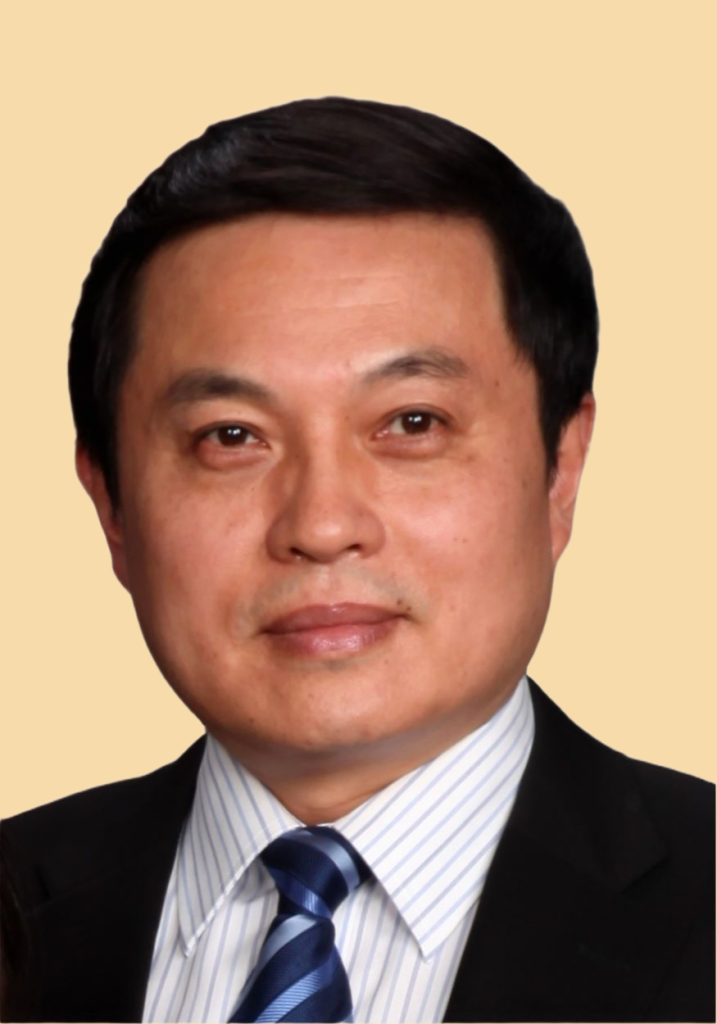
Dr. Haiyan Hu is the Chair Professor of Mechanics at Beijing Institute of Technology (BIT). He served as President of BIT from 2007 to 2017 and President of Nanjing University of Aeronautics and Astronautics from 2001 to 2007.
Prof. Hu has made distinguished contributions to the dynamics and control of aerospace structures, particularly nonlinear dynamics of controlled structures, deployment dynamics of large-scale space structures, and flutter control of aircraft structures. His distinctions include Membership in the Chinese Academy of Sciences, Foreign Membership in Academia Europaea, Honorary Membership in the Hungarian Academy of Sciences, and an Honorary Doctorate from Lomonosov Moscow State University. He is also the recipient of two prestigious awards: the ASME Thomas Caughey Dynamics Medal and the ASCE Raymond Mindlin Medal.
V. Afraimovich Award (2020-present)
For outstanding young scholars in Nonlinear Physical Science
Makrina Agaoglou (Spain)
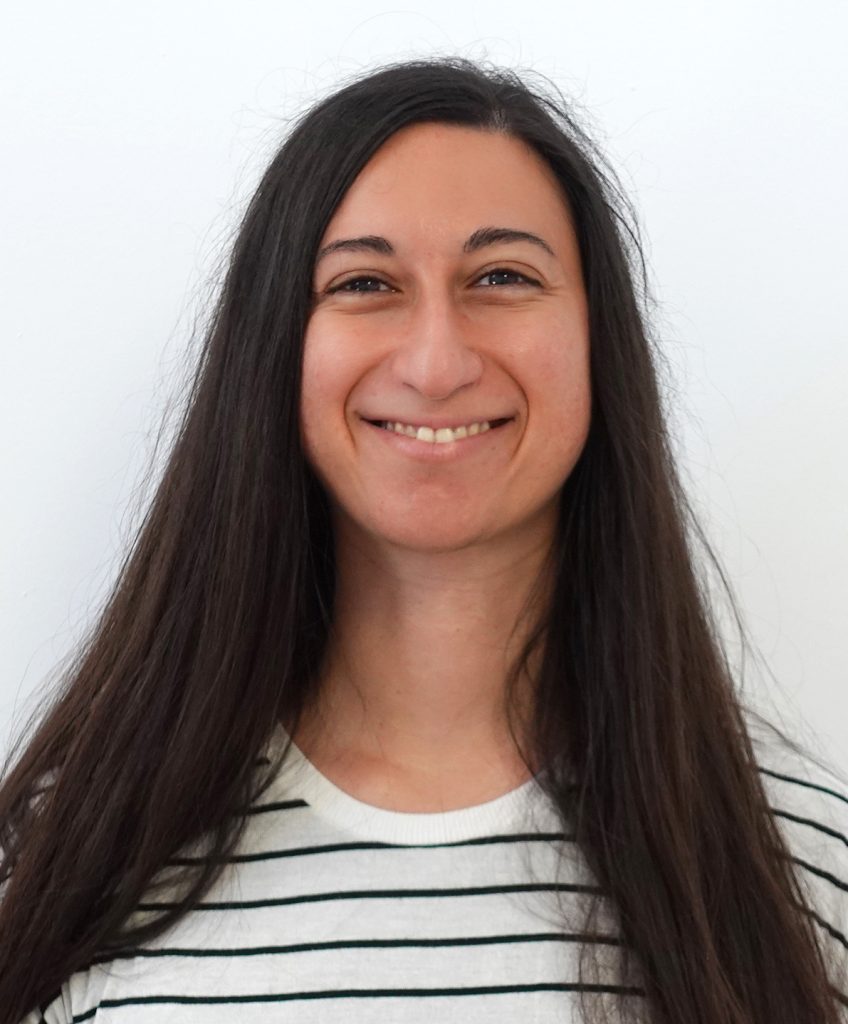
Dr. Makrina Agaoglou is an Associate Professor of Applied Mathematics at the Universidad Politécnica de Madrid (UPM), in the School of Industrial Engineering. She obtained her BSc in Mathematics, MSc in Theoretical Mathematics, and PhD in Applied Mathematics from the Aristotle University of Thessaloniki, Greece. During her doctoral studies, she completed a research stay at the University of Essex (UK) funded by the Greek State Scholarships Foundation (IKY).
Following her PhD, she held research positions at several international institutions, including the University of Massachusetts Amherst (USA), Aristotle University of Thessaloniki (Greece), the Slovak Academy of Sciences (Slovakia), the Spanish National Research Council (CSIC, Spain), and the University of Bristol (UK), where she participated in the CHAMPS programme. She was also a Juan de la Cierva Incorporación Researcher at CSIC and a member of the Geophysical Fluid Dynamics Group.
Her research focuses on dynamical systems and their applications to geophysical flows, chemical reaction dynamics, and nonlinear phenomena. She has authored 30 scientific publications and two books, and has secured several national and international research grants. She serves on the Early Career Editorial Board of Physica D: Nonlinear Phenomena and has held editorial and organizational roles in numerous international scientific activities.
Beyond her research, Dr. Agaoglou is strongly committed to outreach and education. She is co-founder of the Women in Mathematics in Madrid (WOMAT) initiative and has organized numerous activities promoting mathematics and scientific careers among school and university students. She has also supervised undergraduate, master’s research projects and a PhD thesis and actively contributes to the dissemination of mathematics to broader audiences.
Jianzhe Huang (China)
Hidden dynamics of periodic motions for piecewise nonlinear systems
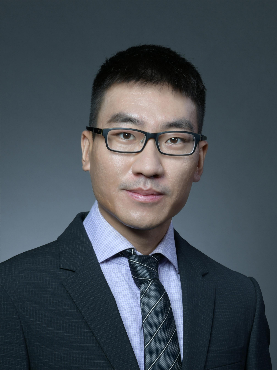
Jianzhe Huang is an associate professor of Aeronautics and Astronautics at Shanghai Jiao Tong University. He obtained PhD degree from Washington University in St. Louis in 2015 and master degree from Southern Illinois University in 2012. His research focuses on complex dynamics of discontinuous/time varying systems and its real-world applications. He has extended Luo’s theory of flow switchability, and developed a semi-analytic framework for periodic motions and bifurcations of piecewise nonlinear dynamical systems, which can obtain the complete dynamic evolution map including hidden routes. He published over 40 journal papers, and has authored one monograph in rotor dynamics. He serves as associate editor at Journal of Vibration Testing and System Dynamics, Aerospace Systems. He is also young editorial board members at International Journal of Dynamics and Control. His researches are funded by NSF of China and other provincial and ministerial level projects. He was the co-organizer of many international conferences, including ASME IDETC/CIE, NSC, ICASSE etc.
Anna Zakharova (Germany)